

The Genesis Mission: America’s AI Moonshot
A strategic initiative to accelerate scientific breakthroughs and maintain U.S. technological leadership through AI-powered research and development
10,000-100,000x Faster Simulations
AI-powered scientific discoveries could compress research timelines from years to hours in fields like protein folding and nuclear fusion, dramatically accelerating breakthrough discoveries that would otherwise take decades.
Three-Tier Data System
Federal datasets organized into public research access, proprietary industry use, and classified national security categories for targeted AI analysis, ensuring appropriate access while protecting sensitive information.
China Counter-Strategy
Genesis Mission positioned as America’s strategic response to China’s AI advancement, with Trump comparing its scope to the Manhattan Project and Apollo program, establishing a clear national priority for AI leadership.
DOE-Led Supercomputing Network
Integration of national laboratories’ supercomputers with private AI “hyperscalers” (Nvidia, AMD, Oracle, HPE) to create the American Science and Security Platform, combining federal and private sector computing power.
Energy Cost Reversal Goal
Using AI to boost domestic energy production and grid efficiency, directly addressing electricity demands from AI data centers themselves, creating a sustainable cycle of energy innovation.
Scientific Foundation Models
Training specialized AI on decades of federal research data to automate experiment design, test hypotheses, and accelerate breakthroughs across critical sectors from medicine to materials science.
Understanding Genesis Mission: How Trump's AI Platform Could Transform Science
On November 24, 2025, President Donald Trump signed an executive order launching what the White House describes as one of the nation's most significant federal initiatives: the Genesis Mission. Think of it like creating the world's most powerful research superpower—a centralized command center where artificial intelligence teams up with the nation's smartest computers and decades of scientific data to solve problems that currently take years, but could soon take weeks.
Imagine your favorite scientist finally having a super-intelligent assistant who never sleeps, processes information instantly, and can suggest breakthrough ideas in minutes. That's essentially what Genesis Mission aims to create, but on a national scale.
What Exactly Is the Genesis Mission?
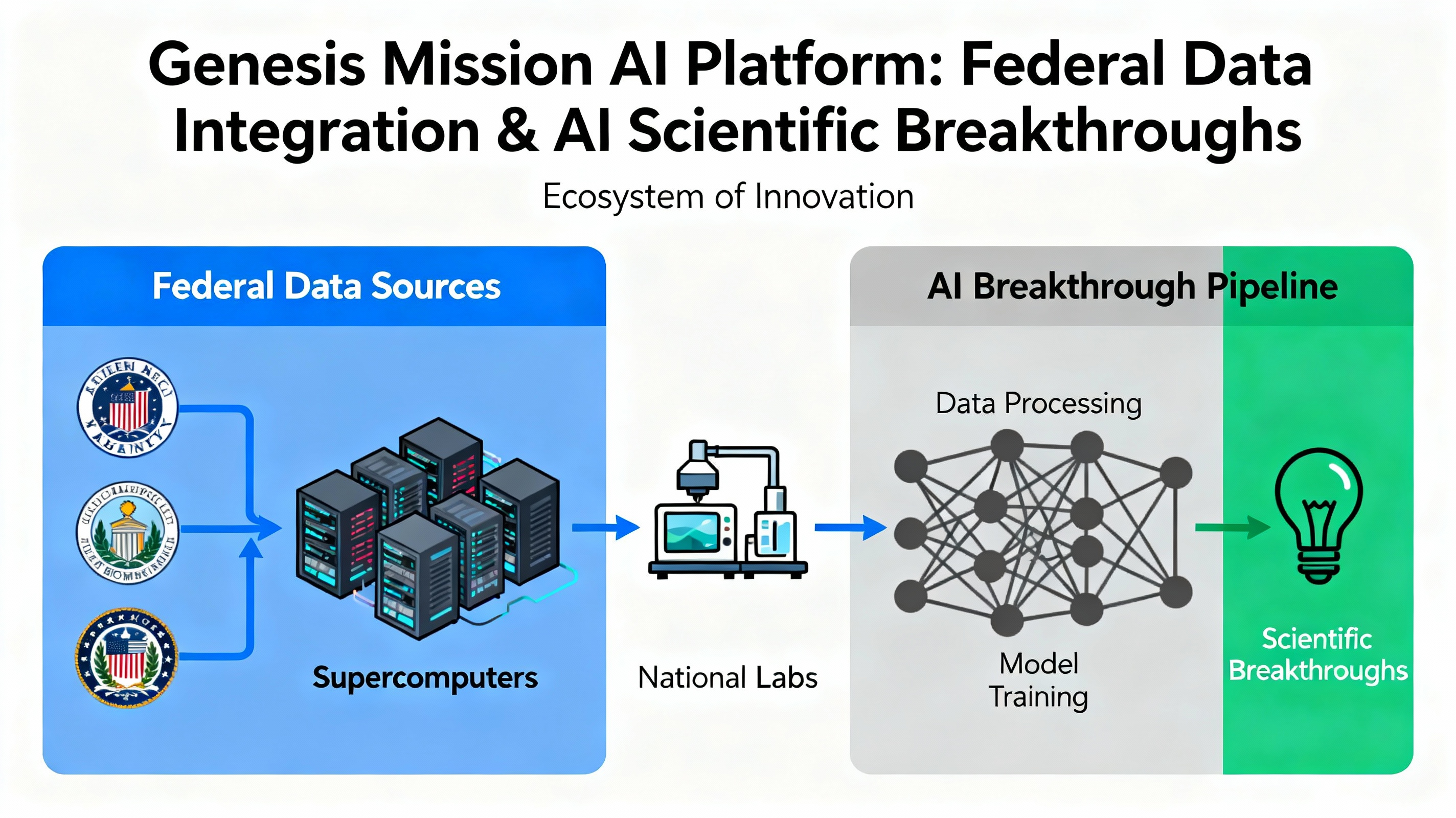
The Genesis Mission is a federal initiative led by the Department of Energy that builds an integrated AI platform connecting all of America's national laboratories, supercomputers, and scientific datasets into one unified system. Picture 17 national laboratories scattered across the country—each one packed with cutting-edge equipment and decades of research data—finally working together as a single super-laboratory.
Here's the simple breakdown: The mission takes massive amounts of scientific data that the federal government has collected over decades, feeds it into the world's most powerful AI systems, and creates what officials call an "American Science and Security Platform." This platform uses AI agents and foundation models to automate complex research workflows, test hypotheses automatically, and compress discovery timelines from years into months or even weeks.
Energy Secretary Chris Wright oversees the initiative, with Dr. Darío Gil (Under Secretary for Science) leading the actual implementation. It's their job to connect the dots between all these different research facilities and make them work like one giant brain.
Why the Name "Genesis Mission"?
The name carries intentional weight. Trump compared it to two of America's greatest achievements: the Manhattan Project (which developed the atomic bomb during World War II) and the Apollo Program (which landed humans on the moon in 1969). Both represented unprecedented national mobilization of resources, talent, and funding to solve seemingly impossible problems.
The comparison isn't casual—it's strategic. The genesis of something means its origin or beginning, and the Trump administration positions this as the beginning of a new era in American scientific capability. Unlike those historical programs with singular goals (build a bomb, reach the moon), Genesis Mission tackles multiple challenges across energy, medicine, materials science, national security, and semiconductors.
How Does the Genesis Mission Actually Work?
The platform operates like a closed-loop scientific machine. Here's the workflow in plain terms:
The Components:
✅ Supercomputers: The Department of Energy operates 17 national laboratories with some of the world's most powerful supercomputers. New systems like the "Solstice" supercomputer at Argonne National Lab will feature 100,000 NVIDIA Blackwell GPUs—essentially giving AI researchers computational power that would have seemed impossible just years ago.
✅ Scientific Datasets: These are the raw materials. Federal agencies have collected massive amounts of research data over decades—everything from climate observations to nuclear research to biological experiments. This data becomes the training ground for AI models.
✅ AI Agents: These aren't robots walking around labs (though automated robotic systems do exist). Instead, they're software programs trained to understand scientific problems, generate hypotheses, design experiments, and analyze results. One AI agent might propose: "Here's a new material composition to test for battery efficiency."
✅ Automation Workflows: Rather than scientists manually running thousands of tests, the system can automate large portions of experimental design and analysis, letting humans focus on interpretation and breakthrough thinking.
The Process:
The platform essentially creates a loop where AI proposes experiments, systems run them (often using robotic laboratories), collect data, analyze results, and feed that information back to AI for the next iteration—all at superhuman speed.
The Three Strategic Focus Areas
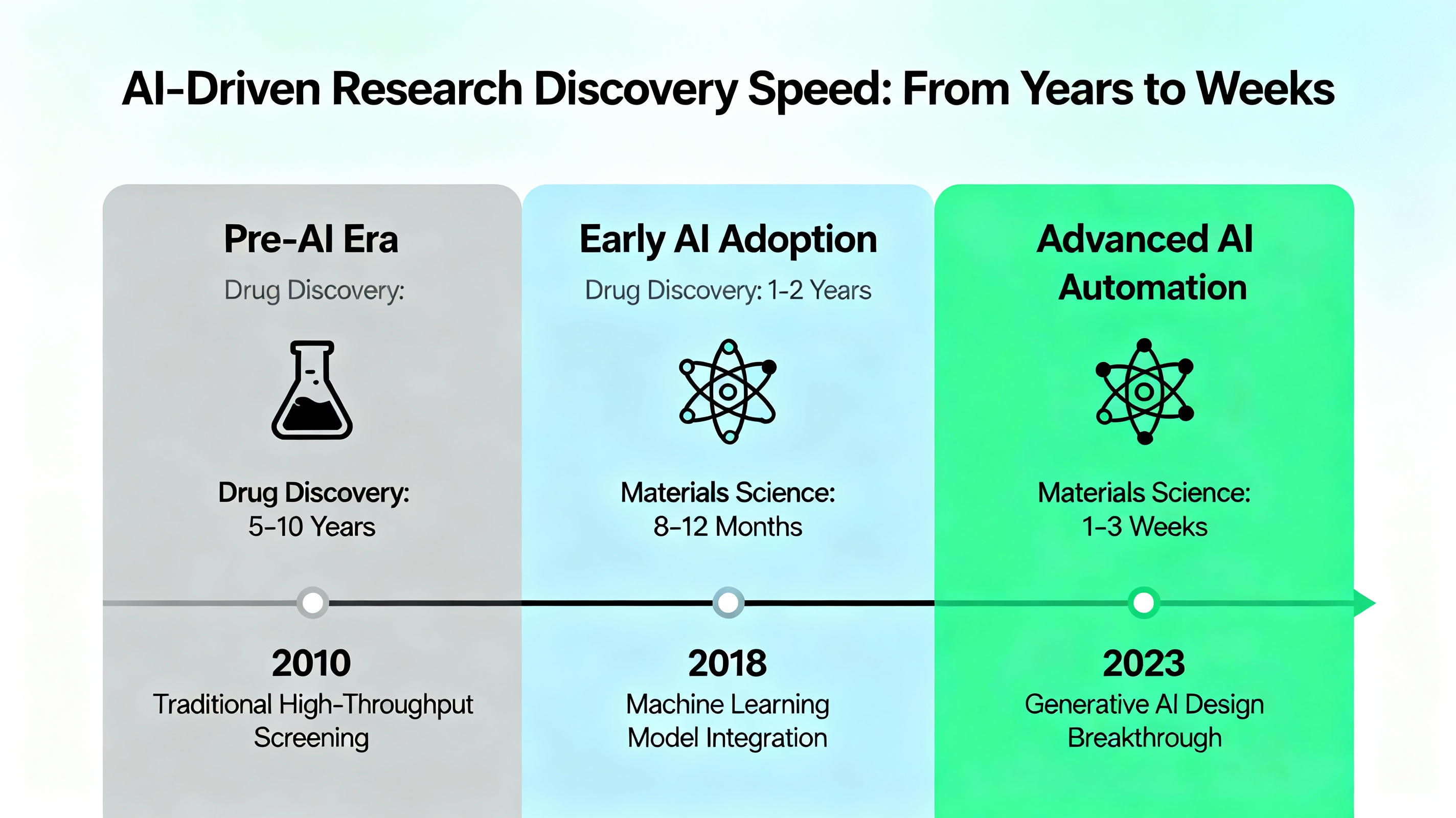
The Genesis Mission prioritizes three major national challenges:
🔋 American Energy Dominance: The mission accelerates research into advanced nuclear energy, fusion power, and grid modernization. For context, the current timeline for fusion research breakthroughs spans decades; AI acceleration could compress this significantly, helping America secure clean, reliable, and affordable energy independence. The Solstice and Equinox supercomputers at Argonne specifically support this work.
🔬 Advancing Discovery Science: This covers biotechnology, critical materials, semiconductors, quantum information science, and space exploration. AI can design novel proteins for medicine, discover advanced materials for technology, and optimize semiconductor designs faster than traditional research methods.
🛡️ Ensuring National Security: The mission includes systems to monitor the safety and reliability of America's nuclear stockpile, accelerate defense materials development, and create AI technologies that enhance national defense capabilities. This aspect explains why data security and classification controls are built into the platform.
The Speed Factor: From Years to Weeks
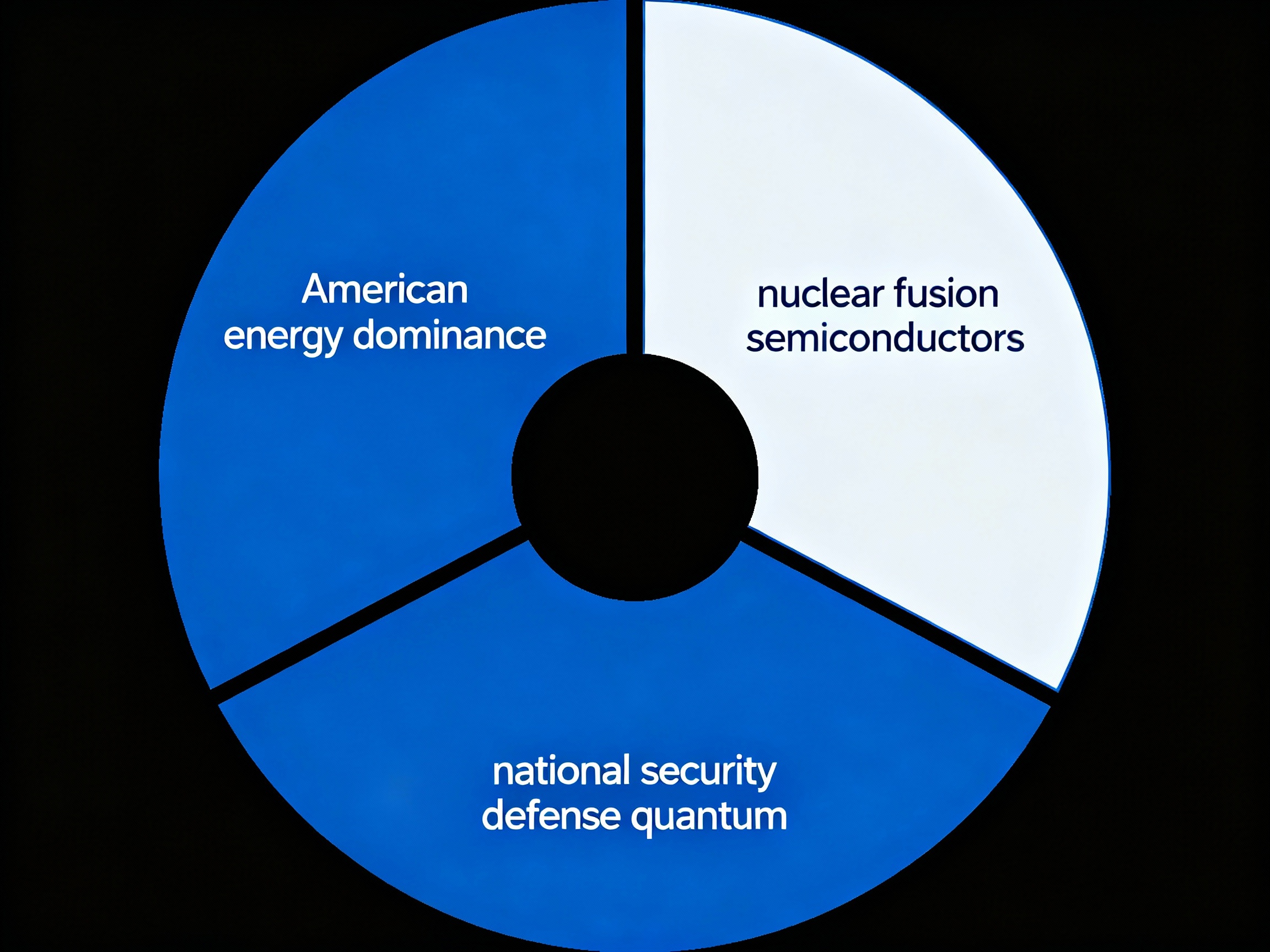
This might sound hyperbolic, but it's based on current real-world results. Here's why the acceleration matters:
Traditional Drug Discovery: Developing a new pharmaceutical typically takes 10-15 years and costs billions of dollars. With AI-assisted platforms currently in use, some timelines have compressed to months.
Materials Science: Previously, scientists would manually test thousands of compound combinations. Berkeley Lab's A-Lab (Automated Laboratory) combines AI algorithms that propose new materials with robots that physically test them. What used to take years now happens in weeks.
Protein Design: Researchers using AI designed novel enzymes that had never existed in nature. These weren't theoretical—they physically validated them and they worked. That kind of breakthrough would have taken decades through traditional methods.
The White House claims Genesis Mission could reduce discovery timelines from years to "mere days or even hours" for certain types of research. That's not just faster science—it's potentially transformative for solving critical problems.
Private Sector Partnerships: The Secret Sauce
Here's what makes Genesis Mission different from a purely government project: it's a public-private partnership from the ground up.
Major technology companies have already committed resources:
📌 NVIDIA: Providing 100,000 Blackwell GPUs for the Solstice supercomputer
📌 AMD: Contributing advanced processors and computing architecture
📌 Hewlett Packard Enterprise (HPE): Building sovereign AI systems at national labs
📌 Dell: Supporting infrastructure development
📌 Oracle: Collaborating on the Equinox system with NVIDIA
These companies aren't just donating equipment—they're investing because Genesis Mission will generate enormous amounts of data and real-world use cases that train the next generation of AI systems. It's mutually beneficial: the government gets computing power, companies get training data and presence in critical infrastructure.
Why Trump's Administration Sees This as Essential
The driving force behind Genesis Mission is competition with China. Here's the strategic thinking:
🎯 China's Progress: According to the Stanford AI Index Report 2025, China now ranks second only to the US in frontier AI model releases. It leads the world in AI patents and research output. China is investing heavily in AI infrastructure across energy, manufacturing, and defense.
🎯 America's Advantages: The US has:
- 17 national laboratories with cutting-edge facilities
- Decades of accumulated federal research data (the world's largest scientific dataset collection)
- Tech companies like NVIDIA and AMD restricted from exporting to China
- A tradition of breakthrough research
🎯 The Vulnerability: Despite larger R&D budgets since the 1990s, scientific progress has actually slowed. New drug approvals have declined. More researchers are needed to achieve the same outputs. This suggests inefficiency—exactly what AI automation could fix.
By combining these advantages, the administration believes Genesis Mission positions the US to maintain technological supremacy across critical fields.
The Benefits: What Could Actually Change
If Genesis Mission delivers on its promises, here's what's possible:
✅ Medical Breakthroughs: AI could design novel drugs for cancer, Alzheimer's, and other diseases faster than ever. Instead of 15 years to bring a drug to market, imagine 2-3 years.
✅ Clean Energy Revolution: Fusion energy moves from "someday" to "this decade." Advanced battery materials become available sooner. Grid optimization reduces energy waste nationally.
✅ Semiconductor Leadership: The US regains ground in chip design and manufacturing, reducing dependence on Taiwan and other vulnerable supply chains.
✅ Materials Innovation: New alloys, composites, and materials enable better spacecraft, military equipment, and consumer technology.
✅ National Security Advantages: More reliable nuclear stockpile monitoring, faster defense system development, and AI-enhanced security systems.
✅ Economic Impact: As the White House frames it, doubling the productivity of American R&D within a decade could generate trillions in economic value.
The Challenges and Drawbacks: What Could Go Wrong
But Genesis Mission isn't without concerns:
⛔️ Data Security and Privacy: The platform combines public, proprietary, and classified data. While officials promise "controls," blending classified information with private sector systems creates security risks. Even with safeguards, data breaches could expose sensitive research.
⛔️ Cost Uncertainty: The White House hasn't disclosed full funding. Building nine new supercomputers, expanding computing infrastructure, and maintaining 17 national laboratories costs billions. The execution budget remains unclear.
⛔️ Unrealistic Timelines: The comparison to Apollo and Manhattan Project is compelling but potentially misleading. Those programs had singular, measurable goals (reach the moon, build a bomb). Genesis Mission tackles multiple complex fields simultaneously. Success metrics for "doubling R&D productivity" are vague and difficult to measure.
⛔️ Dependency on Sustained Political Support: Multi-year research initiatives need continuity. A change in administration or political priorities could disrupt the mission, wasting years of setup and coordination.
⛔️ AI Limitations: Current AI struggles with truly creative leaps, original hypothesis generation, and understanding novel paradigms. AI excels at optimization and pattern recognition within known frameworks. Revolutionary breakthroughs often require human creativity that AI alone can't replicate.
⛔️ Academic Concerns: Some researchers worry about over-dependence on AI-driven research reducing human intuition and serendipitous discovery—often the source of the most important breakthroughs.
⛔️ Regulatory and Ethical Issues: Who gets access to discoveries? How is intellectual property handled? What happens when AI research touches sensitive areas like bioweapons or surveillance? These questions remain partially unanswered.
How Genesis Mission Compares to China's AI Strategy
This is crucial context. China's approach differs significantly:
| Aspect | Genesis Mission (US) | China's Strategy |
|---|---|---|
| Focus | Centralized federal platform connecting existing assets | Decentralized compute hubs across 8+ provinces |
| Investment | Federal funding + private sector partnerships | Government-backed + state enterprises |
| Speed | Theoretical months/weeks for breakthroughs | Deployment-focused integration across industries |
| Data | Scientific datasets from government research | Proprietary + industrial data + surveillance data |
| Goal | Technological leadership in frontier research | Integration of AI across infrastructure, energy, manufacturing |
| Advantage | Academic tradition + private tech leadership | Scale of deployment + rapid integration |
| Constraint | Regulatory oversight + data privacy laws | Export restrictions on chips limit compute capacity |
The real competition isn't just about which country builds smarter AI—it's about which country can integrate that AI most effectively into every sector of its economy.
Real-World Examples: AI Accelerating Discovery Today
These aren't hypothetical scenarios—they're happening now:
🧬 Protein Design: DeepMind's AlphaFold revolutionized protein structure prediction, compressing a problem that took humans decades into something AI solved in months. Researchers are now using AI to design completely novel proteins for medical applications.
🔋 Battery Research: AI platforms identified promising new material compositions for lithium-ion batteries that charge faster and last longer. Traditional research would have screened materials for years; AI did it in weeks.
⚙️ Materials Science: Berkeley Lab's A-Lab discovered new compounds for semiconductors and energy storage by combining AI hypothesis generation with robotic testing. The closed-loop process is precisely what Genesis Mission aims to scale nationally.
🔬 Drug Screening: AI systems designed novel compounds targeting drug-resistant infections and tested them against millions of potential interactions. What would require a team of researchers working for months happened in days.
These examples prove the concept works. Genesis Mission essentially attempts to systemize and scale what's already working in pockets across American research.
The National Labs: America's Hidden Scientific Advantage
Few people realize the US maintains 17 Department of Energy national laboratories. These aren't just research parks—they're massive facilities with supercomputers, specialized equipment, and centuries of accumulated scientific knowledge:
- Argonne National Lab: Advanced Photon Source, home to the new Solstice supercomputer
- Oak Ridge National Lab: Summit supercomputer and materials research
- Lawrence Berkeley National Lab: Cutting-edge AI and automation research
- Los Alamos National Lab: Nuclear security and materials research
These labs currently operate somewhat independently. Genesis Mission connects them, creating what Dr. Darío Gil calls "a scientific instrument for the ages." Think of it like upgrading from 17 separate orchestras to one coordinated 500-piece ensemble.
What the 60-Day Directive Means
The executive order directs Energy Secretary Chris Wright to submit a list of at least 20 major science and technology challenges within 60 days (roughly by end of January 2026). These become the initial priority targets for Genesis Mission resources.
Examples likely include:
👉 Advanced nuclear fusion energy
👉 Semiconductor design and manufacturing
👉 Critical materials and rare earth elements
👉 Quantum computing and quantum information science
👉 Climate resilience and energy grid optimization
👉 Biodefense and pandemic preparedness
This 60-day process essentially forces the administration to articulate specific, measurable goals—making the mission more concrete than the current "double R&D productivity" framing.
How This Could Impact Your Life (Even If You're Not a Scientist)
While Genesis Mission sounds like abstract government policy, the real-world effects could touch everyone:
💡 Healthcare: Novel cancer treatments reach market 10 years faster. Personalized medicine becomes practical. Diseases like Alzheimer's move closer to cure.
💡 Energy Bills: Fusion power could provide nearly unlimited clean energy, potentially lowering electricity costs or enabling universal clean power.
💡 Phone and Computer Performance: Semiconductor breakthroughs mean faster devices, better battery life, and cheaper technology.
💡 Climate Action: Advanced materials and grid optimization could accelerate renewable energy adoption and climate solutions.
💡 National Security: A more competitive America militarily and economically, potentially affecting global stability and future conflicts.
💡 Jobs and Economy: New research breakthroughs create entirely new industries, job categories, and economic opportunities.
The Questions Still Unanswered
Despite the executive order, several key questions remain:
❓ How will sensitive data be protected? The combination of classified information with private sector systems in cloud environments creates potential vulnerabilities.
❓ What's the actual budget? Full-year costs and long-term funding commitments haven't been publicly detailed.
❓ How will results be shared? Will discoveries be patented by companies, owned by government, or open-source? This affects innovation incentives.
❓ What happens if progress stalls? What's the contingency if AI-accelerated breakthroughs don't materialize on the promised timeline?
❓ How does this integrate with international research? American scientists often collaborate with international counterparts; does Genesis Mission restrict that?
The Bigger Picture: Why Now?
Three factors converge to explain why Trump launched Genesis Mission now:
1️⃣ AI Maturity: AI technology has reached a point where it can genuinely accelerate scientific research. Five years ago, this would have been theoretical. Today, it's demonstrable.
2️⃣ Geopolitical Pressure: China's accelerating AI capabilities and the semiconductor competition create urgency. This isn't just about leadership—it feels like national security.
3️⃣ Regulatory Momentum: Trump's administration has systematically removed AI barriers and promoted the sector. Genesis Mission represents the culmination of that pro-innovation philosophy applied to government research.
Wrapping Up: Is Genesis Mission the Future or Just Wishful Thinking?
The Genesis Mission represents an ambitious bet that artificial intelligence can transform scientific research. The evidence suggests the potential is real—AI is already accelerating discovery across multiple fields. Whether Genesis Mission delivers on its promises depends on execution, sustained funding, data security, and realistic timeline expectations.
The comparison to Apollo and Manhattan Project is inspiring but risky. Those programs succeeded partly because they had singular, measurable goals and unprecedented national consensus. Genesis Mission tackles multiple complex challenges requiring coordination across government, industry, and academia.
What we can say with confidence: the Trump administration is making a serious, well-funded bet that AI is the future of American scientific competitiveness. Whether it pays off will define American technological leadership for the next decade. The implications—for medicine, energy, national security, and economic opportunity—make this one of the most significant science policy initiatives in recent years.
For creators, technologists, and anyone tracking AI's impact on research and innovation, Genesis Mission is worth monitoring closely.







