
Grokipedia: Elon Musk’s AI Encyclopedia Controversy

Examining the short-lived launch and ongoing controversies surrounding Elon Musk’s AI-generated alternative to Wikipedia
🚀 Failed Launch
Grokipedia launched on October 27, 2023, with 885,279 AI-generated articles but crashed within hours of going live, suffering immediate technical difficulties despite the ambitious rollout.
📝 Wikipedia’s Response
Wikipedia created its own page documenting Grokipedia, highlighting it as an AI encyclopedia accused of copying content directly from Wikipedia, creating a meta-documentation of the controversy.
⚠️ Content Bias Allegations
Grokipedia faces allegations of bias, including altered articles reflecting Musk’s personal views on gender transition and false claims linking pornography to worsening the AIDS epidemic.
🔄 Contradictory Positioning
Musk positions Grokipedia as a “truthful, independent alternative” to Wikipedia, claiming it will “purge propaganda,” yet evidence shows reliance on Wikipedia’s existing content rather than creating truly original material.
🤖 AI-Only Verification
Unlike Wikipedia’s human-edited model, Grokipedia relies solely on xAI’s Grok chatbot for content creation and verification, raising concerns about accuracy and the lack of human oversight in the editorial process.
❌ Misinformation Spread
Early analysis reveals Grokipedia spreads misinformation, such as falsely asserting social media causes increased transgender visibility, demonstrating the risks of AI-only content generation without fact-checking mechanisms.
Understanding the AI-Powered Knowledge Revolution
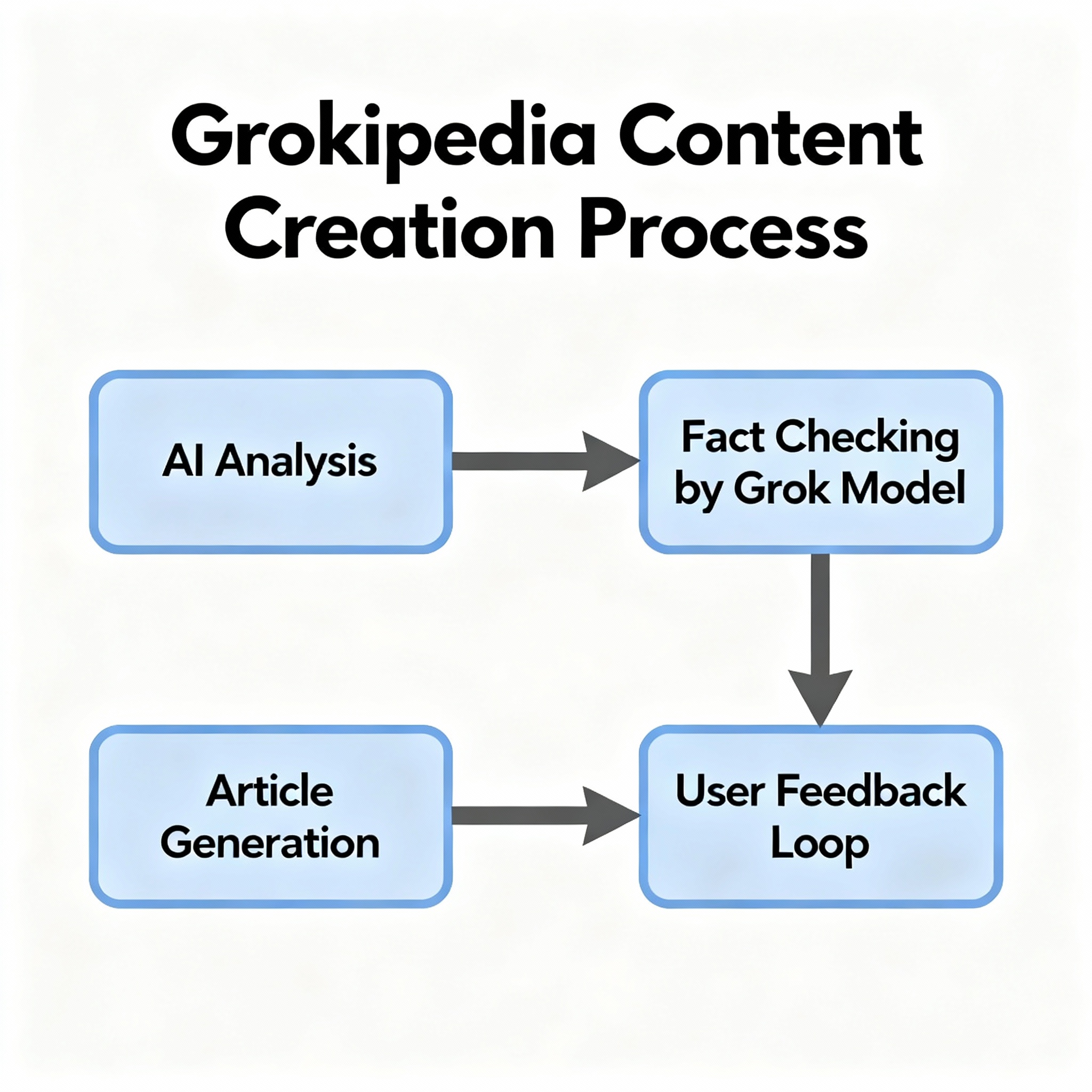
On October 27, 2025, Elon Musk launched Grokipedia, an artificial intelligence-powered online encyclopedia that aims to challenge Wikipedia’s two-decade dominance in the world of free knowledge. This new platform, developed by Musk’s AI company xAI, represents a bold experiment in how we create, verify, and consume information online. Rather than relying on human volunteers to write and edit articles, Grokipedia uses the Grok AI model to generate content, fact-check information, and maintain its database of articles.
The launch has sparked intense debate about the future of online knowledge platforms, raising questions about accuracy, bias, transparency, and whether artificial intelligence can truly replace the collaborative human effort that has made Wikipedia one of the most visited websites in the world. This article explores what Grokipedia is, how it works, what makes it different from Wikipedia, and whether this AI-powered approach to knowledge sharing represents progress or poses new risks.
The Birth of a Wikipedia Alternative
Timeline of Events:
- September 29, 2025 → Elon Musk announces Grokipedia project
- Late September → Launch delayed to improve quality
- October 27, 2025 → Grokipedia goes live with 885,279 articles
- October 27 Evening → Site briefly crashes, comes back online
Elon Musk first announced plans to build Grokipedia in response to criticism that Wikipedia is biased. He declared that his company xAI was building a massive improvement over Wikipedia, calling it a necessary step toward xAI’s goal of understanding the Universe.
The billionaire entrepreneur has been vocal about his dissatisfaction with Wikipedia for years, accusing the platform of being controlled by far-left activists. When Grokipedia finally went live on October 27, the platform listed 885,279 articles—significantly fewer than Wikipedia’s 7 million English-language entries—but Musk promised that version 1.0 would be ten times better than the current 0.1 version.
What Powers Grokipedia Behind the Scenes
Key Technology Features:
📌 Built on Grok AI Model → Same technology powering the Grok chatbot on X
📌 Real-Time Data Integration → Connected to live internet data, including X posts
📌 Automated Fact-Checking → AI verifies all articles and includes timestamps
📌 First Principles Reasoning → AI analyzes multiple sources to synthesize truth
Unlike conversational AI tools like ChatGPT, Grokipedia operates through direct topic searches. You simply type a keyword, and the system displays an AI-generated summary with related information. The platform claims that all articles are fact-checked by Grok and include timestamps showing when the AI last updated the content.
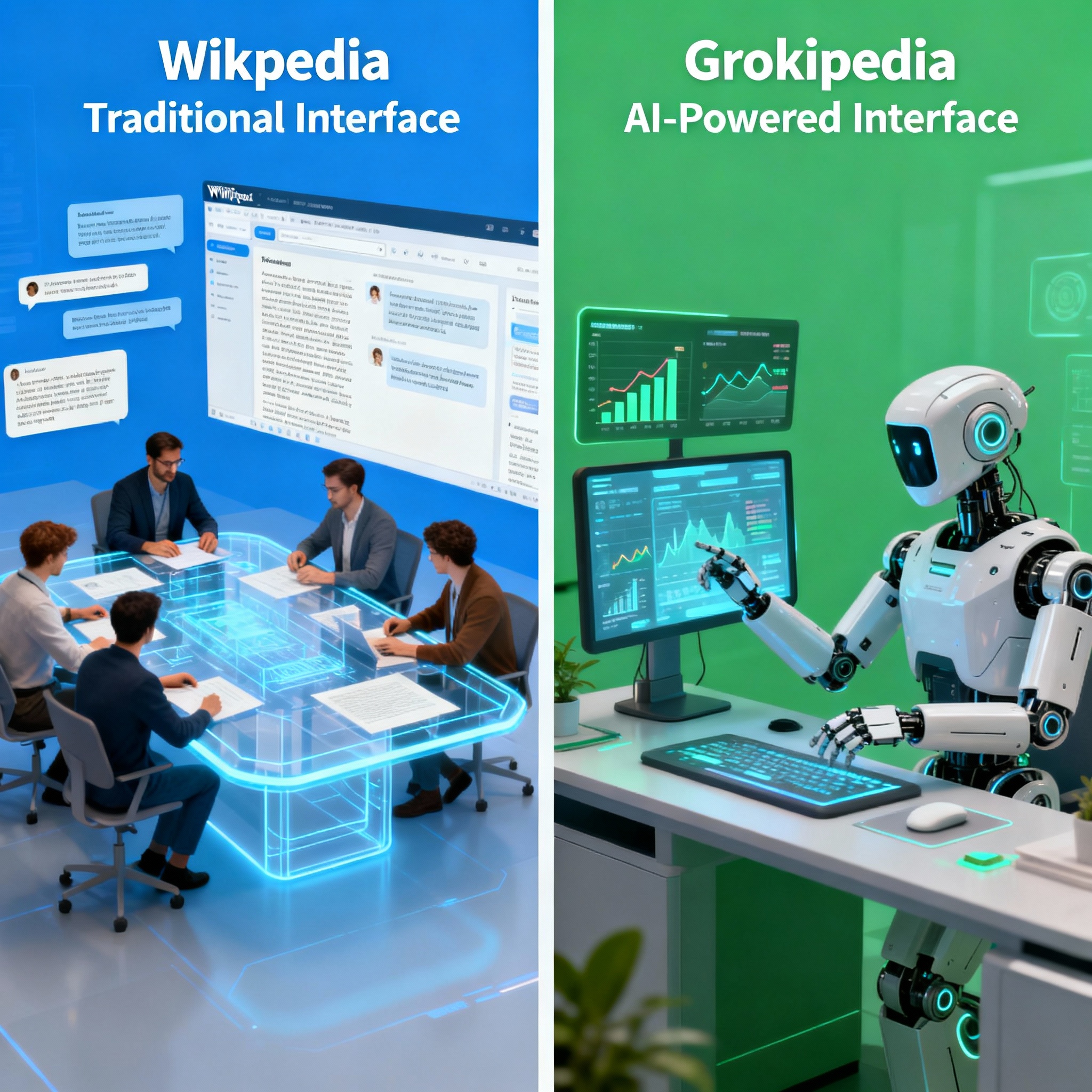
The technical architecture relies on what xAI describes as first principles reasoning, where the AI analyzes information from multiple sources, identifies what is true or false, and synthesizes the most accurate entry possible. However, users cannot directly edit articles like they can on Wikipedia—you can only suggest corrections through a feedback form.
How You Can Start Using Grokipedia Today
Quick Start Steps:
1️⃣ Visit grokipedia.com (completely free)
2️⃣ Type your search term into the clean search bar
3️⃣ Press enter to view AI-generated summaries
4️⃣ Create an account for personalized features (optional)
5️⃣ Submit corrections via the reporting system if you find errors
The design is minimalist with a dark background, resembling a mix between Wikipedia and ChatGPT. The platform works best when you search for specific topics rather than asking broad questions. Think of it as a search engine for encyclopedia entries rather than a conversational assistant.
Important Note: You are essentially a consumer rather than a contributor. Your only option for reporting errors is to submit a correction request through the reporting system, which the AI will then process.
The Great Divide: Wikipedia’s Humans vs Grokipedia’s Machines
Content Creation Methods
| Aspect | Wikipedia | Grokipedia |
|---|---|---|
| How It Works | Millions of volunteer editors write & revise | AI generates & maintains automatically |
| Edit History | All changes tracked publicly | Limited human moderation |
| Update Speed | Depends on volunteer availability | Real-time updates possible |
| Community Role | Central to platform | Minimal to none |
Organizational Structure
| Aspect | Wikipedia | Grokipedia |
|---|---|---|
| Owner | Wikimedia Foundation (nonprofit) | xAI (for-profit company) |
| Control | Distributed, community-driven | Centralized corporate control |
| Funding | Donations, no ads | Funded by xAI investors |
| Decision Making | Open community guidelines | Algorithmic & corporate decisions |
The Transparency Question
Wikipedia’s Strength: ✅
- Every edit is visible
- Public discussion pages
- You can see exactly who changed what and when
- Clear reasoning for edits available
Grokipedia’s Weakness: ⛔️
- Articles lack detailed sourcing
- Limited editorial records
- Simple “fact-checked by Grok” labels without evidence
- Difficult to verify independently
The Benefits That Could Transform Your Research Experience
✅ Lightning-Fast Information Synthesis
Generate comprehensive summaries on topics in seconds, pulling from multiple sources simultaneously.
✅ Real-Time Knowledge Updates
Connected to live internet data, reflecting breaking news faster than human-edited platforms.
✅ Potentially Broader Source Integration
Can analyze academic papers, legal filings, and documents beyond traditional published sources.
✅ Reduced Edit Wars and Vandalism
No edit wars or malicious vandalism since AI maintains control over content.
✅ Consistency Across Articles
Uniform formatting, writing style, and structure across all entries for easier navigation.
The Drawbacks You Cannot Afford to Ignore
⛔️ AI Hallucinations and Factual Errors
Large language models frequently generate confident-sounding information that is completely false. Research shows Grok had a 94% failure rate when asked to identify article sources.
Examples of Early Errors:
- Incorrectly attributed statements to Wikipedia co-founder Larry Sanger that he never made
- False claims about pornography and the AIDS epidemic
- Inaccurate assertions about social media and transgender issues
⛔️ Hidden Biases in a Different Form
AI systems have different biases rather than no bias. Decision-making is not transparent, making bias harder to detect than human editorial bias.
Evidence:
- Wired, Time, and Washington Post documented entries reflecting Musk’s personal views
- Platform accused of promoting conservative perspectives
- Articles appear to downplay criticisms of Musk
⛔️ Plagiarism Concerns and Wikipedia Dependence
Many Grokipedia entries appear copied directly from Wikipedia with disclaimers stating “adapted from Wikipedia under Creative Commons license.”
Wikipedia spokesman: “Even Grokipedia needs Wikipedia to exist”
⛔️ No Community Oversight or Democratic Participation
Centralized AI control eliminates democratic oversight, concentrating power in xAI’s hands.
⛔️ Limited Transparency About Sources and Reasoning
Minimal sourcing makes it nearly impossible to verify claims independently or evaluate evidence quality.
What Experts and Insiders Are Saying
Jimmy Wales (Wikipedia Co-Founder)
Expressed serious doubt that AI could replicate Wikipedia’s thorough investigation and community-driven model
Larry Sanger (Wikipedia Co-Founder)
“Initial impression was that it was very okay and potentially better than Wikipedia on some topics, though the jury is still out”
Columbia Journalism Review
Grok had a 94% failure rate when identifying article sources
BBC Research
AI assistants produced answers with significant inaccuracies in 51% of cases
The Register
“Hard to be better than Wikipedia when many of your articles are derived directly from Wikipedia pages”
The Path Forward: What Comes Next for AI Encyclopedias
Version 1.0 Development Goals:
📌 Rapid article generation for breaking news
📌 Built-in fact-scoring systems (confidence ratings)
📌 Seamless integration with other AI tools
📌 Reduce Wikipedia dependence by end of 2025
Future Capabilities:
🚀 Multimodal content (text, images, audio, video)
🚀 Improved Grok 4 model with better reasoning
🚀 Expanded context windows for deeper analysis
🚀 Community participation with AI oversight
🚀 Enhanced safety measures to reduce hallucinations
Making Sense of the Knowledge Wars
| Factor | Winner | Why |
|---|---|---|
| Transparency | Wikipedia | All edits publicly visible |
| Speed | Grokipedia | Real-time AI updates |
| Accuracy (Proven) | Wikipedia | 24 years of community vetting |
| Democratic Participation | Wikipedia | Anyone can edit & discuss |
| Bias Visibility | Wikipedia | Debates are public |
| Scale & Coverage | Wikipedia | 7 million articles vs 885K |
| Editing Control | Grokipedia | No vandalism or edit wars |
Key Takeaways for Information Consumers:
✅ Wikipedia remains more trusted for historical, well-documented subjects
✅ Grokipedia useful for quick synthesis of current topics
✅ Always verify important information through multiple sources
✅ Never rely on a single platform for critical decisions
✅ Understand the strengths and limitations of each source
✅ Stay skeptical and ask where information comes from
The future likely holds not a winner-takes-all scenario but an ecosystem where different platforms serve different needs. AI-powered tools like Grokipedia will coexist with human-curated resources like Wikipedia, each offering distinct advantages.
Your challenge is to become a more critical consumer of information, navigating this changing information landscape with awareness of each platform’s biases and strengths. The revolution in how we create and share knowledge has only just begun—stay curious, stay skeptical, and never stop questioning your sources.
💡 Pro Tip for Content Creators Like You:
Both platforms can serve as research starting points for your YouTube content and softreviewed.com articles. Use Grokipedia for trending topics and breaking news angles, but always verify facts through primary sources before publishing. This dual approach gives you speed while maintaining credibility with your audience.