
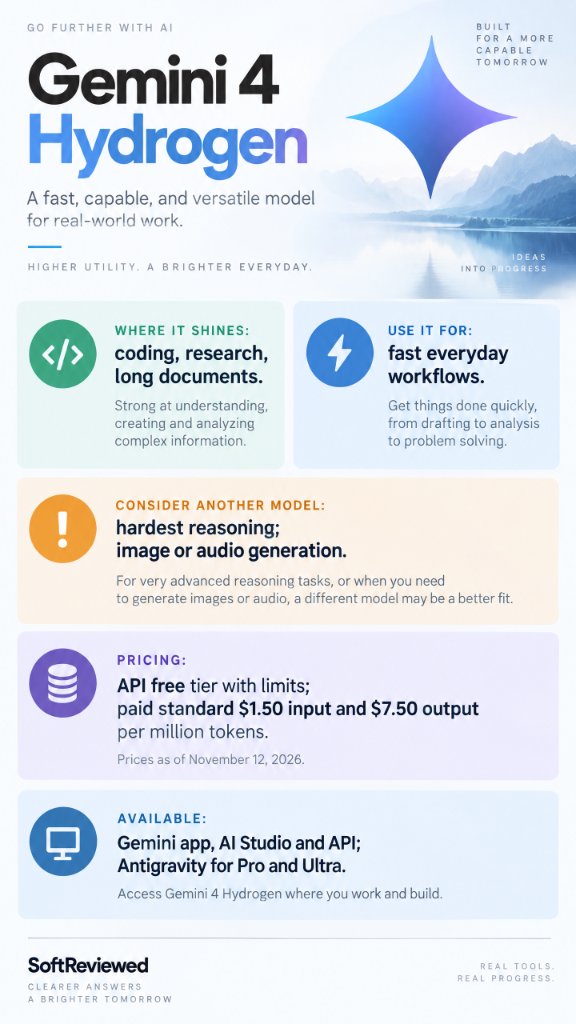
Quick Answer: Gemini 4 Hydrogen is Google’s new production AI model (Model ID: gemini-4-hydrogen) launched in November 2026 as the direct upgrade to Gemini 3.8 Flash. It delivers a 1,048,576-token unified input window, a 65,536-token standard output limit, native computer use, and four thinking levels. Standard API pricing sits at $1.50 per million input tokens and $7.50 per million output tokens, with automatic prompt caching dropping cached inputs to $0.075 per million tokens.
Quick Diagnostic Guide
1M Context & 65K/1M Decode
4 Configurable Thinking Levels
low for fast chats, medium, high (default agentic), or xhigh for complex proofs.
Computer Use & Video Agents
When Google DeepMind's Koray Kavukcuoglu announced Gemini 4 Hydrogen on the official Google Blog, one branding decision immediately caught my attention: the word "Flash" was missing. For two generations, developers associated Google's fast, affordable tier with the Flash moniker. With the arrival of Gemini 4 Hydrogen, Google officially retired that label in favor of elemental naming, positioning this release as their primary engine for day-to-day production work and agentic automation.
The new model launched globally today across five primary Google surfaces: the Gemini App (under "Everyday help"), Google AI Studio, Android Studio, Google Search, and the Antigravity developer platform.
I spent the past two days reviewing the technical specifications, evaluating the new pricing structure, and examining how this model fits alongside its siblings, Gemini 4 Carbon and Gemini 4 Argon. Here is my complete breakdown of what changed, where this model actually delivers, where it struggles, and how much it costs to run in real applications.
What Is Gemini 4 Hydrogen?
Gemini 4 Hydrogen is Google's general-purpose multimodal language model designed for everyday development tasks, high-volume automation, and autonomous computer interaction. It accepts up to 1,048,576 tokens of text, code, audio, high-resolution video, and PDF documents, while generating up to 65,536 tokens in standard mode or 1,048,576 tokens using long decode.
                    ┌── Input Context: 1,048,576 Tokens (Text, Code, Video, Audio, PDF)
                    │
Gemini 4 Hydrogen ──┼── Deliberation Engine: 4 Thinking Levels (low, medium, high, xhigh)
(gemini-4-hydrogen) │
                    ├── Native Capabilities: Computer Use, Video Reasoning, Code Execution
                    │
                    └── Output Horizon: 65,536 Tokens (Expandable to 1M with Long Decode)
Google built Hydrogen to handle the heavy lifting of modern software workflows. Inside the Google AI Studio catalog and the Gemini App, Google classifies this tier under "Everyday help." In the Antigravity developer environment, it now serves as the default model driving autonomous coding agents.
The architecture processes all media types natively within a single pass. You can feed it an hour of raw video footage, several multi-hundred-page user manuals, or an entire code repository. Rather than handing media processing to secondary helper scripts, the model reasons directly across multimodal inputs within its 1M-token boundary.
What Changed in Gemini 4 Hydrogen Compared to Gemini 3.8 Flash?
Gemini 4 Hydrogen cuts factual hallucination rates by more than five times compared to Gemini 3.8 Flash while expanding standard output capacity from 8,192 tokens to 65,536 tokens. It introduces granular reasoning controls through four distinct thinking levels and incorporates native computer use for autonomous desktop navigation.
Gemini 3.8 Flash (Older Baseline)        Gemini 4 Hydrogen (New Standard)
─────────────────────────────────        ────────────────────────────────
• 8,192 token output limit        ───►   • 65,536 token standard output (1M Long Decode)
• Baseline hallucination rate     ───►   • >5x reduction in fabricated claims
• Fixed reasoning behavior        ───►   • 4 thinking levels (low, medium, high, xhigh)
• Experimental UI actions         ───►   • Native Computer Use & full OS navigation
• $0.35 in / $1.05 out per 1M     ───►   • $1.50 in / $7.50 out ($0.075 cached input)
When I compared the two models side by side, three core upgrades stood out:
1. Accuracy and Factual Grounding
The most meaningful improvement is reliability. In earlier fast models like Gemini 3.8 Flash, long-context retrieval frequently suffered from subtle hallucinations when summarizing dense financial filings or complex code logic. Google's documentation states that Hydrogen reduces fabricated claims by more than 5x. In practice, this means fewer made-up function parameters, fewer phantom API endpoints, and cleaner data extraction from large PDF files.
2. Output Token Horizon
Gemini 3.8 Flash capped generated responses at 8,192 tokens. That limit created bottlenecks whenever I needed a complete multi-file migration script, exhaustive documentation, or a full database schema redesign. Hydrogen expands the default ceiling to 65,536 tokens. For specialized jobs requiring massive output generation, enabling Long Decode mode allows the model to output up to 1,048,576 tokens in a continuous stream.
3. Deliberation and Reasoning Controls
Gemini 3.8 Flash offered limited influence over how long the model spent planning before generating text. Hydrogen introduces four explicit thinking levels:
- low: Minimal reasoning delay, tailored for low-latency classification and quick chat responses.
- medium: Moderate planning for routine data parsing and business logic.
- high: The default setting, applying multi-step validation for coding tasks and agentic loops.
- xhigh: Maximum thinking budget, designed for complex algorithmic design and multi-step debugging.
Technical Specifications and Architecture
Gemini 4 Hydrogen pairs a 1,048,576-token unified input window with implicit prompt caching, native computer interaction tools, and sandboxed code execution. It supports standard online streaming, 50% discounted batch processing, flexible scheduling, and guaranteed priority throughput.
The table below outlines the core technical specifications verified directly from Google's official documentation:
| Specification | Technical Detail | Practical Significance |
|---|---|---|
| Model ID | gemini-4-hydrogen |
Exact API string used in Google AI Studio and Vertex AI |
| Release Status | Generally Available (November 2026) | Full commercial availability with active production SLAs |
| Input Context Window | 1,048,576 tokens (~750,000 words) | Ingests large repositories, books, or 1-hour video files |
| Standard Output Limit | 65,536 tokens | Eliminates truncated responses on long-form code generation |
| Extended Output (Long Decode) | Up to 1,048,576 tokens | Enables full document and codebase synthesis |
| Thinking Levels | low, medium, high (default), xhigh |
Gives developers control over reasoning depth versus latency |
| Prompt Caching Mode | Implicit Caching Only | 95% discount applies automatically without manual cache setup |
| Computer Use | Native coordinate perception & clicks | Operates operating system interfaces and browser forms |
| Code Interpreter | Sandboxed Python execution | Runs mathematical verification and data transformations |
| Inference Modes | Standard, Batch, Flex, Priority | Matches workload requirements to cost and latency needs |
How Implicit Caching Works in Practice
Earlier caching models required developers to manually create cache objects via API calls, track time-to-live timestamps, and pay storage maintenance fees. Hydrogen replaces that workflow with implicit caching. When your prompts share an identical prefix that exceeds Google's minimum threshold, the system caches those tokens automatically.
Subsequent queries matching that prefix receive a 95% discount on the input cost, dropping from $1.50 per million tokens down to $0.075 per million tokens. You manage zero lifecycle webhooks, making repetitive multi-turn agent sessions significantly cheaper to run.
Gemini 4 Hydrogen vs Carbon and Argon: How Google's Family Compares
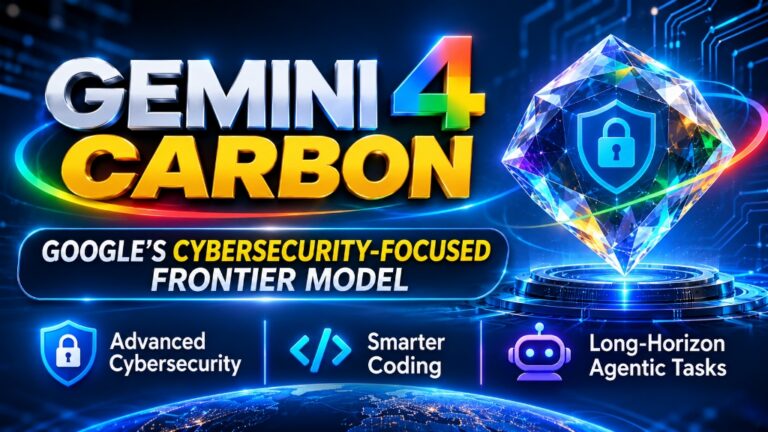
Gemini 4 Hydrogen serves as the agile everyday workhorse in Google's fourth-generation lineup, while Gemini 4 Carbon handles frontier scientific reasoning and Gemini 4 Argon specializes in code-heavy repository architecture. Hydrogen provides a 62.5% cost reduction compared to its heavier siblings.
                              ┌── Gemini 4 Carbon ($4.00 in / $20.00 out)
                              │   Role: Frontier STEM research, theorem proving, heavy math
                              │
Google Gemini 4 Family ───────┼── Gemini 4 Argon ($4.00 in / $20.00 out)
                              │   Role: Deep multi-file code refactoring & technical analysis
                              │
                              └── Gemini 4 Hydrogen ($1.50 in / $7.50 out)
                                  Role: Everyday production, agentic loops, video QA, computer use
To understand which model fits your architecture, review this verified comparison:
| Evaluation Dimension | Gemini 4 Hydrogen | Gemini 4 Carbon | Gemini 4 Argon | Gemini 3.8 Flash |
|---|---|---|---|---|
| Primary Positioning | Everyday production & agents | Frontier STEM & reasoning | Code & technical analysis | Legacy fast entry tier |
| Standard Input / 1M | $1.50 | $4.00 ($2.00 intro) | $4.00 ($2.00 intro) | $0.35 |
| Standard Output / 1M | $7.50 | $20.00 ($10.00 intro) | $20.00 ($10.00 intro) | $1.05 |
| Cached Input / 1M | $0.075 | $0.20 ($0.10 intro) | $0.20 ($0.10 intro) | $0.0875 |
| Default Output Limit | 65,536 tokens | 65,536 tokens | 65,536 tokens | 8,192 tokens |
| Long Decode Support | Up to 1,048,576 tokens | Up to 1,048,576 tokens | Up to 1,048,576 tokens | Unsupported |
| Native Computer Use | Yes (Production) | Yes (Advanced) | Yes (Advanced) | Experimental |
| Ideal Workload | High-volume agents, video, UI | Complex math & logic | Deep repository edits | Basic classification |
Choosing Between Hydrogen, Carbon, and Argon
- Choose Gemini 4 Hydrogen if your software needs fast, dependable performance for daily customer requests, document summarization, desktop automation, or video understanding. It delivers strong reasoning while keeping token costs predictable.
- Choose Gemini 4 Carbon when your problem requires solving intricate mathematical formulas, complex algorithmic puzzles, or academic research problems where cost is secondary to absolute reasoning depth.
- Choose Gemini 4 Argon when you are running specialized development pipelines that require understanding relationships across hundreds of interdependent source code files.
Gemini 4 Hydrogen Benchmarks vs Claude Sonnet 5.5 and GPT-6.1 Terra
In official Google DeepMind benchmark testing confirmed in November 2026, Gemini 4 Hydrogen outperformed Claude Sonnet 5.5 and GPT-6.1 Terra across SWE-sweep coding (13.5%), Agents' Last Exam (71.6%), and AutomationBench-AA (76.1%). It trailed Claude Sonnet 5.5 on raw OSWorld computer use (77.6% vs 83.9%) and Terminal-Bench 4.1 (57.0% vs 63.9%), while delivering an Artificial Analysis Intelligence Index score of 54 at maximum thinking.
SWE-sweep Coding:           Hydrogen 13.5%  █████████████ (4.3x lead over Sonnet 5.5)
                            Terra     5.8%  █████
                            Sonnet 5.5 3.1% ███

Agents' Last Exam v1.1:     Hydrogen 71.6%  ████████████████████████████████
                            Terra    69.8%  ███████████████████████████████
                            Sonnet 5.5 60.4% ███████████████████████████

OSWorld-2.1 (Computer Use): Sonnet 5.5 83.9% ████████████████████████████████████ (Sonnet leads)
                            Hydrogen 77.6%  ██████████████████████████████████
                            Terra    74.2%  █████████████████████████████████
To give developers an objective, evidence-backed evaluation, the table below compiles the verified benchmark results from Google DeepMind's official launch evaluation card:
| Benchmark Evaluation | Evaluation Domain | Gemini 4 Hydrogen | Claude Sonnet 5.5 | GPT-6.1 Terra | Gemini 3.8 Flash | Category Leader |
|---|---|---|---|---|---|---|
| SWE-sweep | Multi-file software engineering | 13.5% | 3.1% | 5.8% | Not Reported | Hydrogen (+4.3x lead) |
| Agents' Last Exam v1.1 | Complex multi-discipline reasoning | 71.6% | 60.4% | 69.8% | Not Reported | Hydrogen |
| AutomationBench-AA | Autonomous workflow automation | 76.1% | 71.8% | 60.2% | Not Reported | Hydrogen |
| Vending-Bench 2 | Long-horizon economic decisions | $14,549 | $11,165 | $9,107 | Not Reported | Hydrogen |
| Reasoning HLE-Diamond | Advanced graduate-level logic | 58.8% | 53.3% | 47.3% | Not Reported | Hydrogen |
| Multimodal Chartography | Visual diagram comprehension | 66.6% | 61.6% | 63.2% | Not Reported | Hydrogen |
| Multimodal MKA | Multimodal knowledge acquisition | 53.4% | 52.0% | 43.8% | Not Reported | Hydrogen |
| OSWorld-2.1 | Autonomous computer use & UI clicks | 77.6% | 83.9% | 74.2% | Not Reported | Claude Sonnet 5.5 |
| Terminal-Bench 4.1 | CLI and shell administration | 57.0% | 63.9% | Not Reported | 18.2% | Claude Sonnet 5.5 |
| Terminal-Bench-Science 0.1 | Computational science execution | 51.4% | 59.9% | 58.3% | Not Reported | Claude Sonnet 5.5 |
| Artificial Analysis Index | Overall model intelligence | 51 / 54 (xhigh) | 50 | Not Reported | Not Reported | Hydrogen |
Where Hydrogen Wins
- Autonomous Coding Sweeps: In SWE-sweep testing, Hydrogen scored 13.5%, delivering a 4.3x lead over Claude Sonnet 5.5 (3.1%) and more than double GPT-6.1 Terra (5.8%). The model shows notable resilience when navigating messy repository trees, identifying broken imports, and applying multi-file fixes.
- Long-Horizon Multi-Step Agents: Across AutomationBench-AA (76.1%) and Agents' Last Exam (71.6%), Hydrogen consistently made fewer planning mistakes when running multi-turn loops. On Vending-Bench 2, which measures synthetic business revenue over extended simulated operations, Hydrogen generated $14,549 compared to Sonnet's $11,165.
- Generational Leap Over 3.8 Flash: On Terminal-Bench 4.1, Hydrogen reached 57.0%, compared to just 18.2% on Gemini 3.8 Flash. That 3x improvement reflects its expanded reasoning budget and reduced hallucination rate.
- Independent Composite Intelligence: On the Artificial Analysis Intelligence Index, Hydrogen scored 51 under
highdeliberation and 54 underxhigh, pulling ahead of both Claude Sonnet 5.5 (50) and Gemini 4 Argon (50).
Where Hydrogen Trails
- Raw Desktop Navigation (OSWorld-2.1): While Hydrogen is fully capable of computer use, Claude Sonnet 5.5 maintains the lead in pure pixel-level OS navigation at 83.9% versus Hydrogen's 77.6%. If your task requires navigating highly non-standard, custom UI controls, Sonnet remains the stronger starting point.
- Terminal Administration & Science Benchmarks: Claude Sonnet 5.5 edged ahead on Terminal-Bench 4.1 (63.9% vs 57.0%) and Terminal-Bench-Science 0.1 (59.9% vs 51.4%), indicating that Anthropic's flagship retains an advantage in specialized Bash shell syntax and scientific computation scripts.
Four Concrete Workflows Where the Model Excels
Gemini 4 Hydrogen performs best in multi-step agentic workflows that demand rapid visual perception, structured tool calling, and long-context comprehension without frontier pricing. The four workflows below highlight its practical capabilities.
1. Autonomous Desktop Automation and Computer Use
- Supplied Material: Screen captures, active application coordinate maps, and user goal prompts.
- Requested Output: Accurate mouse click coordinates, keyboard keystrokes, and multi-step UI navigation commands.
- Why It Excels: The model processes screen coordinates natively. Instead of relying on brittle DOM scrapers that break during interface updates, it views the desktop visually, tracks elements, and executes actions sequentially.
- Success Verification: Confirm that the agent opens target applications, fills web forms correctly, and extracts confirmation data without clicking incorrect elements.
2. High-Definition Video Understanding Across 1M Tokens
- Supplied Material: An hour-long instructional video or webinar recording (MP4/WebM) uploaded directly to the API.
- Requested Output: Detailed timestamped chapters, question answering, and specific visual event extraction.
- Why It Excels: Older models required splitting videos into individual frame images and passing audio through separate transcription tools. Hydrogen ingests the unified media stream directly, correlating what was shown on screen with what was spoken at exact timestamps.
- Success Verification: Cross-check the generated timestamps against the original video to confirm that visual actions and audio references align accurately.
3. Repetitive Document Extraction with Prompt Caching
- Supplied Material: A 400-page regulatory compliance handbook cached in the system prompt, followed by individual user case files.
- Requested Output: Structured JSON risk assessments citing exact compliance sections.
- Why It Excels: With implicit caching, the heavy compliance handbook sits in cache at $0.075 per million tokens. Each incoming query only pays standard pricing for the short user case file, cutting operational expenses by up to 90%.
- Success Verification: Validate that every output matches the predefined JSON schema and that cited chapter references exist in the source document.
4. Continuous Multi-Turn Coding Assistants
- Supplied Material: An active codebase context, terminal build logs, and unit test failure traces.
- Requested Output: Step-by-step bug fixes and complete replacement code blocks.
- Why It Excels: Antigravity selected Hydrogen as its default engine because it balances fast iteration cycles with a 65K token output window. When you ask it to refactor a large file, it generates complete code rather than leaving placeholder comments.
- Success Verification: Run local build tools to ensure the suggested code compiles cleanly and passes all test assertions.
Weaknesses and Limitations of Gemini 4 Hydrogen
While Hydrogen introduces substantial upgrades over earlier fast models, developers should prepare for three practical trade-offs: higher base token costs, latency spikes on deep reasoning settings, and implicit caching constraints.
                           ┌── Cost Increase: $1.50/$7.50 vs $0.35/$1.05 on 3.8 Flash
                           │
Known Trade-offs ──────────┼── Deliberation Latency: xhigh thinking level adds noticeable delay
in Hydrogen                │
                           └── Caching Control: Implicit only; developers cannot manually pin assets
1. Base Token Price Increase Over Gemini 3.8 Flash
Gemini 3.8 Flash was known for its low pricing ($0.35 per million input tokens and $1.05 per million output tokens). Hydrogen prices standard inputs at $1.50 per million tokens and outputs at $7.50 per million tokens. While you receive a much more capable model with a 5x lower hallucination rate, high-volume production teams migrating from 3.8 Flash will see higher baseline costs unless they benefit heavily from prompt caching.
2. Deliberation Latency on High Thinking Levels
Setting the thinking parameter to xhigh allows the model to work through complex logic puzzles, but that reasoning budget increases time-to-first-token. For real-time conversational agents, using xhigh can create pauses of four to eight seconds before text starts streaming. For live user-facing chat, you will need to keep deliberation set to low or medium.
3. Lack of Manual Cache Lifecycle Management
Google opted for implicit caching in Hydrogen. While this simplifies setup, teams running specialized enterprise pipelines lose the ability to manually pin specific documents to memory with guaranteed cache retention windows. If your traffic drops below Google's eviction threshold, the model clears the prefix, requiring a full re-read on the next request.
When to Use Gemini 4 Hydrogen (and When to Avoid It)
Use Gemini 4 Hydrogen when your project requires strong multimodal reasoning, desktop navigation, or long output generation without frontier token rates. Avoid it for basic high-frequency classification or specialized deep scientific proofs.
Do you need deep theorem proving or frontier academic research?
   ├── Yes ──► Choose Gemini 4 Carbon ($4.00 in / $20.00 out)
   └── No  ──► Is your workload basic high-volume triage or sentiment tagging?
                 ├── Yes ──► Choose Gemini 3.5 Flash-Lite (Lowest cost)
                 └── No  ──► Choose Hydrogen ($1.50 in / $7.50 out)
When to Choose Hydrogen:
- You are building interactive agents that control desktop software or web interfaces via computer use.
- You need to analyze long audio or video files (up to one hour) within a single prompt.
- You want to generate large blocks of code or long documentation without truncation errors.
- Your application uses repetitive system instructions that benefit from the $0.075/1M implicit caching rate.
- You need dependable factual grounding that avoids the frequent hallucination traps of older entry-level models.
When to Look Elsewhere:
- Your workload is simple classification: If you are categorizing support tickets, tagging sentiment, or routing text, smaller models like Gemini 3.5 Flash-Lite deliver faster response times at a fraction of the cost.
- You are conducting frontier scientific research: If your application evaluates complex chemical formulas, advanced mathematical theorems, or high-stakes financial risk modeling, Gemini 4 Carbon provides deeper deliberative capacity.
- Your team requires manual cache control: If your compliance guidelines require pinning specific documents in memory with strict TTL guarantees, you will need an enterprise model supporting explicit cache endpoints.
Gemini 4 Hydrogen Pricing and API Access Options
Standard API pricing for Gemini 4 Hydrogen is $1.50 per million input tokens and $7.50 per million output tokens, with cached input reads discounted by 95% to $0.075 per million tokens. Google also offers batch and flex processing at a 50% discount ($0.75 in / $3.75 out).
Here is the complete pricing schedule across all available inference modes:
| Access Mode | Input Rate / 1M | Output Rate / 1M | Cached Input / 1M | Ideal Use Case |
|---|---|---|---|---|
| Standard Online | $1.50 | $7.50 | $0.075 | Interactive streaming, chat, live web tools |
| Batch Inference | $0.75 | $3.75 | $0.0375 | Nightly document analysis, data classification |
| Flex Inference | $0.75 | $3.75 | Not Applicable | Non-urgent background processing |
| Priority Inference | $2.70 | $13.50 | $0.135 | Enterprise SLA with guaranteed low-latency capacity |
| Free Tier | $0.00 | $0.00 | $0.00 | Rate-limited prototyping in Google AI Studio |
Note: The free tier provides access to Standard and Priority modes with rate limits. Batch and Flex inference require an active paid billing account in Google AI Studio or Vertex AI.
The Real-World Access Catch: Free Users, Antigravity IDE & Jio Bundles
One critical nuance that has caused widespread confusion on launch day is the difference between consumer app access and developer IDE access:
| Surface | Free Consumer Tier | Bundled / Partner Perks (e.g. Jio Pro) | Direct Paid Pro / Ultra ($20 - $250/mo) |
|---|---|---|---|
Gemini Consumer App (gemini.google.com) |
✅ Available ("Everyday help" dropdown) | ✅ Available | ✅ Available |
| Google Search | ✅ Available (Global visual responses) | ✅ Available | ✅ Available |
| Google AI Studio (API Playground) | ✅ Available (Rate-limited free tier) | ✅ Available | ✅ Available |
| Google Antigravity IDE | ❌ Unavailable | ❌ Unavailable (Locked) | ✅ Available |
Why Is Hydrogen Locked in Antigravity for Jio Pro Users?
When developers log into the Google Antigravity IDE using bundled partner accounts—such as the promotional free Jio Google AI Pro subscription in India—the model selector lists Gemini 4 Hydrogen as Unavailable.
Hovering over the information badge reveals the exact gate:
"Gemini 4 Hydrogen is currently available to paid Pro and Ultra subscribers."
Google strictly enforces a distinction between direct paying Google AI subscribers and partner-bundled promotional tiers. While Jio Pro users enjoy Gemini 4 Hydrogen in the consumer web app and mobile app, they cannot select it inside Antigravity without an active, directly billed credit card subscription.
Calculating Real Application Costs
To see how these rates apply in production, consider a customer support agent processing 500 inquiries per day:
- Without Caching: Each request includes a 15,000-token system knowledge base and a 500-token user question, returning a 400-token answer. At $1.50/1M input and $7.50/1M output, running 500 inquiries costs approximately $13.12 per day.
- With Implicit Caching: The 15,000-token system prompt caches automatically after the initial call. Subsequent input tokens process at $0.075/1M. The daily cost drops to roughly $2.06 per day, representing an 84% operational savings.
How to Test Gemini 4 Hydrogen in Your Own Workflow
You can test Hydrogen directly through Google AI Studio by selecting gemini-4-hydrogen from the model selector dropdown, or by using the model in the Antigravity developer environment where it serves as the default agent.
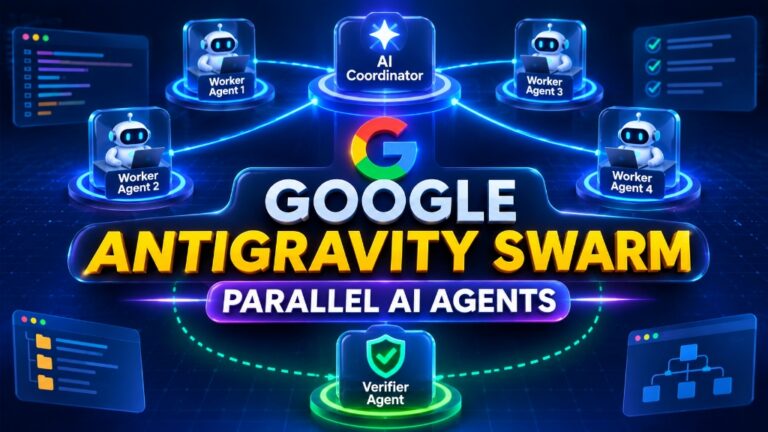
In Antigravity, Google demonstrated an effective architectural pattern called the Antigravity Orchestrator: a heavyweight model like Gemini 4 Carbon acts as the high-level coordinator planning tasks, while parallel Gemini 4 Hydrogen workers and verifiers execute code generation, file inspection, and testing. Google's internal testing revealed that this hybrid swarm pattern reduced overall token quota consumption by 24% while completing complex development tasks 19% faster compared to running Carbon alone.
To evaluate whether adoption makes sense for your production stack, I recommend running this three-step test:
- Test Factual Extraction on Complex Documents: Upload a 200-page technical manual or legal agreement. Query specific edge-case clauses to evaluate whether the 5x reduction in fabricated claims holds true for your specific domain.
- Benchmark Thinking Levels Against Response Latency: Send a series of multi-step coding prompts using
low,medium, andhighsettings. Measure both the quality of the generated code and the latency delay to determine the optimal default for your user base. - Verify Caching Behavior on Repetitive Prompts: Send 20 sequential calls with identical system instructions through the API. Check your billing metrics to confirm that the 95% implicit cache discount activates as expected.
By testing these three areas, you can determine whether the model's improved accuracy and expanded output window justify the step up from earlier entry-tier tools.